
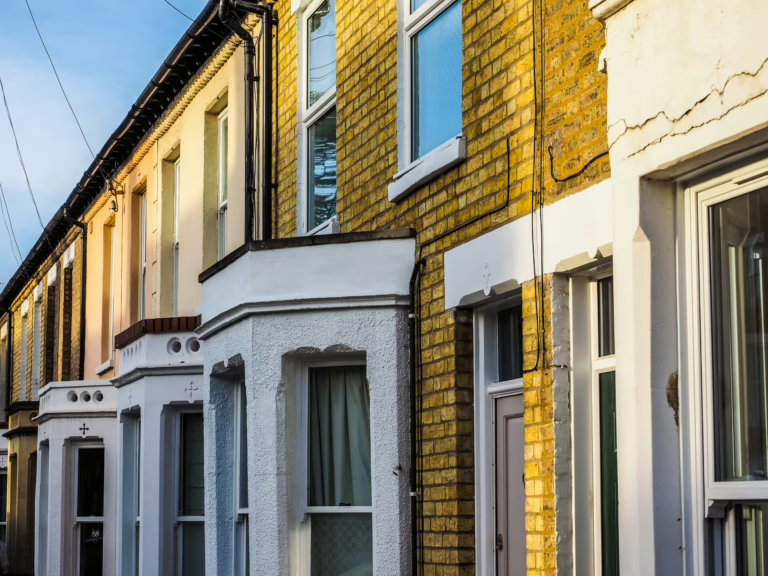
If you’ve been browsing property listings, you’ve probably come across homes described as “maisonettes” and wondered what makes them different from regular flats or houses.
A maisonette is a self-contained property spread across two floors with its own private entrance. It essentially offers a “little house” feel within a larger building. The word comes from the French “maisonnette,” and these distinctive properties have become increasingly popular with buyers looking for more space and privacy than a flat can offer, without the higher costs of a traditional house.
Understanding Maisonettes: The Basics
The term maisonette originates from French, literally translating to “little house.” This perfectly captures what these properties offer.
A maisonette is defined by three key features:
- It spans two floors
- It has its own private front door opening directly to the outside
- It includes an internal staircase connecting the levels
You’ll find maisonettes in various forms across the UK. Many are conversions of Victorian and Edwardian properties, where large period homes have been thoughtfully divided into separate dwellings. Others sit above shops and commercial premises in town centres. Purpose-built maisonettes from the post-war era can be found in suburban developments.
The concept gained significant popularity during the 1960s and 1970s as a solution to housing shortages. It promoted higher-density living before apartment blocks became commonplace.
Maisonette vs Flat: Key Differences
While maisonettes and flats might seem similar at first glance, several important distinctions set them apart.
Private entrance
The most significant difference is the private entrance. A maisonette has its own front door that opens directly from the street. In contrast, flats typically require you to pass through shared entrance halls, corridors, and communal stairwells.
Two-floor layout
Maisonettes are spread across two floors with an internal staircase. This creates a more house-like layout where you might have bedrooms upstairs and living areas downstairs. Flats are usually contained on a single level within a larger building.
Privacy and space
With fewer shared spaces, maisonettes offer reduced noise from neighbours and a greater sense of having your own self-contained home. Many maisonettes also include private outdoor space such as a garden or terrace. Flats more commonly have shared communal gardens.
Cost comparison
Maisonettes typically sit between flats and houses. They’re generally more expensive than a comparable flat but offer better value than a house of similar size.
Maisonette vs House: What Sets Them Apart
While maisonettes share some characteristics with houses, there are notable differences to consider.
Size differences
Houses typically offer three or more bedrooms, loft space, and potentially multiple reception rooms. Maisonettes are usually more compact, often featuring one or two bedrooms. This makes them better suited to smaller households.
Price advantage
Maisonettes are significantly more affordable than houses. Research suggests maisonettes can be 20-25% cheaper than a house of similar size. This makes them an attractive option for first-time buyers or those working with a tighter budget.
Ownership structures
While houses are commonly freehold, maisonettes are more frequently sold as leasehold properties. However, freehold and share of freehold options do exist.
Maintenance responsibilities
In a maisonette, external areas like roofs and foundations are often shared with neighbours. House owners bear sole responsibility for their entire property. This shared responsibility can reduce individual costs but requires cooperation with other residents.
Types of Maisonettes You'll Find
Not all maisonettes are created equal. Understanding the different types can help you identify which might suit your needs best.
Upper maisonettes
These occupy the upper floors of a building and often come with distinct advantages. Many include access to loft space, which can provide valuable storage or even potential for conversion. Upper maisonettes frequently feature balconies or roof terraces, offering private outdoor space with elevated views.
The main drawback is accessibility. You’ll need to navigate stairs regularly.
Lower maisonettes
These sit at ground and lower-ground floor levels. Their standout feature is often direct access to a private garden, which is particularly appealing for families with children or pets.
Lower maisonettes tend to be easier to access and are more suitable for people with mobility considerations. However, depending on location, they may receive less natural light than their upper counterparts.
Period conversions
Victorian and Edwardian houses converted into maisonettes often retain original features like fireplaces, decorative cornices, and high ceilings. Each conversion tends to have a unique layout, offering distinctive charm that’s hard to find in modern builds.
Purpose-built maisonettes
These were constructed during the post-war building boom and designed specifically as maisonettes from the outset. They tend to offer more practical, efficient layouts with clearly defined spaces. However, they may lack the character of older conversions.
Maisonettes above commercial premises
These are common in town centres and high streets. While they can offer excellent locations, it’s worth considering potential noise and smells from businesses below, particularly if they’re restaurants or takeaways.
Leasehold vs Freehold Maisonettes
Understanding whether a maisonette is leasehold or freehold is crucial before making a purchase. It significantly affects your rights, responsibilities, and costs.
Leasehold maisonettes
These are the most common type. With leasehold, you own the property for a set period defined in the lease agreement. This could range from decades to centuries.
You’ll typically pay ground rent to the freeholder and may face restrictions on alterations without permission. When the lease expires, ownership reverts to the freeholder. However, leaseholders have statutory rights to extend their lease or purchase the freehold.
Service charges are usually minimal for maisonettes since there are fewer communal areas than in flat blocks.
Freehold maisonettes
These are less common but highly desirable. With freehold ownership, you own both the property and the land beneath it outright. There’s no ground rent and you have complete control over the property.
In some cases, a freehold maisonette means you own the entire building and may collect ground rent from the other maisonette occupant.
Share of freehold
This represents a middle ground. You and your neighbour jointly own the freehold, sharing maintenance responsibilities and decisions about the building. This arrangement eliminates ground rent and gives you more control than standard leasehold.
Maintenance split
Typically, the upper maisonette handles roof and guttering maintenance, while the lower maisonette manages foundations and ground-level external areas. External walls and shared spaces are usually maintained jointly.
The Benefits of Buying a Maisonette
Maisonettes offer several compelling advantages that make them attractive to various types of buyers.
Affordability
Maisonettes typically cost substantially less than houses while offering more space than standard flats. This makes them an excellent entry point onto the property ladder, particularly for first-time buyers.
House-like privacy
Having your own front door and no shared internal corridors creates a genuine sense of independence. You avoid the feeling of communal living that comes with traditional flat blocks.
Outdoor space potential
Many maisonettes include private gardens, patios, or balconies. This outdoor access is a significant bonus compared to typical flats where you might only have shared communal areas.
Unique character
Converted period maisonettes often feature original architectural details and distinctive layouts. No two conversions are exactly alike, giving your home individual character.
Lower service charges
With minimal communal areas to maintain, service charges for maisonettes are typically lower than those for flats in managed blocks.
Potential Drawbacks to Consider
While maisonettes have many advantages, it’s important to understand the potential challenges before buying.
No Permitted Development Rights
This is a crucial consideration. Maisonettes don’t benefit from Permitted Development Rights, which means any extensions or significant alterations require planning permission. This adds time, cost, and uncertainty to any expansion plans. Your local authority could reject your application.
Limited expansion potential
Even with planning permission, the scope for extending a maisonette is often limited compared to a house. If you’re planning to grow your family or need significantly more space in the future, a maisonette might not meet your long-term needs.
Accessibility concerns
The two-floor layout with internal stairs can be challenging for people with mobility issues, elderly residents, or families with very young children. There’s no option to avoid the stairs as there would be in a bungalow or ground-floor flat.
Shared decision-making
Any exterior work requires coordination with your neighbour. If they’re unwilling or unable to contribute to necessary maintenance, this can create friction and delays.
Potential noise issues
If your maisonette sits above commercial premises, you might experience noise during business hours and food smells from restaurants or takeaways. It’s worth visiting at different times of day before committing to a purchase.
Smaller than houses
For larger families or those who need multiple bedrooms and generous living space, maisonettes typically can’t match what a house offers.
Is a Maisonette Right for You?
Maisonettes suit certain buyers particularly well.
Ideal for:
- First-time buyers looking for affordable property with more space than a flat
- Couples or small families who don't need three or more bedrooms
- Professionals wanting independence without the maintenance burden of a full house
- Downsizers moving from larger properties who still want their own front door
- Investors seeking properties with good rental potential
Not ideal for:
- Anyone with mobility issues who struggles with stairs
- Large families needing multiple bedrooms and extensive living space
- People planning significant home extensions in the near future
- Those who need wheelchair accessibility throughout their home
Before deciding, consider your long-term plans. Will the space meet your needs in five or ten years? Can you manage the stairs as you age? Are you comfortable with the leasehold arrangement if applicable?
Finding Your Perfect Maisonette
When searching for a maisonette, several factors deserve careful attention.
Check the lease length if it’s leasehold. Anything under 80 years can affect your ability to get a mortgage and will reduce the property’s value. Ask about ground rent and any planned increases. Review what maintenance responsibilities fall to you versus your neighbour.
During viewings, pay attention to noise levels, especially if the property is above commercial premises. Check the condition of shared external areas like the roof and walls. Look for signs of damp or structural issues. Our guide on questions to ask during a house viewing covers these checks in more detail.
Ask about the neighbours and the history of maintenance decisions. A cooperative relationship with the other maisonette owner makes life much easier.
Consider the location carefully. Is it close to transport links, schools, and amenities you need? How does the local property market perform?
Frequently Asked Questions
Are maisonettes cheaper than houses?
Yes, maisonettes are typically 20-25% cheaper than houses of similar size. This makes them an attractive option for first-time buyers or those on a tighter budget who still want more space and privacy than a flat offers.
Do maisonettes have gardens?
It depends on the type. Lower maisonettes often include direct access to a private garden, which is one of their main attractions. Upper maisonettes might have balconies or roof terraces instead. Some maisonettes, particularly those above shops, may not have any outdoor space.
Can I extend a maisonette?
Extensions are possible but require planning permission, as maisonettes don’t have Permitted Development Rights. You’ll also need consent from your freeholder if the property is leasehold. Smaller extensions like single-storey additions are more likely to gain approval than major expansions.
Are maisonettes suitable for families?
Maisonettes can work well for small families with one or two children. They offer more space than flats and often include gardens. However, the stairs can be challenging with very young children, and the limited size means they’re less suitable for larger families needing three or more bedrooms.
What's the difference between upper and lower maisonettes?
Upper maisonettes occupy the upper floors and often include loft access and balconies or terraces. Lower maisonettes sit at ground level and typically offer direct garden access and easier accessibility. Upper maisonettes handle roof maintenance,
Do maisonettes have high service charges?
No, service charges for maisonettes are typically much lower than for flats. Because there are minimal communal areas to maintain (no shared hallways, lifts, or extensive grounds), the associated costs are reduced. However, you’ll still share some external maintenance costs with your neighbour.
Is a maisonette better than a flat?
It depends on your priorities. Maisonettes offer more privacy with their own entrance, additional space across two floors, and often private outdoor areas. However, they’re more expensive than flats and the stairs can be less convenient. Flats typically offer lower maintenance responsibilities and may include amenities like lifts.
Can you get a mortgage on a leasehold maisonette?
Yes, you can get a mortgage on a leasehold maisonette. However, lenders typically require the lease to have at least 70-80 years remaining. Shorter leases can make it difficult to secure financing and will affect the property’s value. Always check the lease length before making an offer. If you’re new to mortgages or want to understand more about how they work, our guide to understanding mortgages explains the essentials.
Are maisonettes good investments?
Maisonettes can be solid investments, particularly in areas with strong rental demand. They attract tenants looking for more space than a flat provides at a lower cost than a house. The rental yields are often competitive, though this varies by location. As with any investment property, research the local market thoroughly.
What should I look for when buying a maisonette?
Check the lease length (if leasehold), ground rent amounts, and maintenance responsibilities. Inspect shared external areas for their condition. Visit at different times to assess noise levels, especially if above commercial premises. Ask about the relationship with neighbours who share the building. Review any planned major works and associated costs.
Expert Guidance for Your Maisonette Search
Finding the right maisonette requires more than just browsing online listings. It demands local knowledge, experience with different property types, and an understanding of what makes a good investment for your specific circumstances.
At Michael Anthony Estate Agents, we’ve been helping people find their ideal homes since 1989. With over 30 years of experience across Buckinghamshire, Bedfordshire, and Hertfordshire, we understand the unique characteristics of maisonettes in different areas and can guide you towards properties that truly match your needs and budget.
Whether you’re a first-time buyer weighing up the benefits of a maisonette versus a flat, or you’re looking to downsize from a larger property, our team can provide honest advice tailored to your situation. We’ll help you understand the implications of leasehold versus freehold, identify potential issues during viewings, and negotiate the best possible price.
Our branches in Bletchley, Hemel Hempstead, Milton Keynes, and Tring give us detailed insight into local property markets. We know which areas offer the best value, where maisonettes are most common, and what to expect in terms of pricing and competition.
If you’re considering buying a maisonette or exploring your options, get in touch with our team for a no-obligation conversation. We’re here to make your property search clearer and more successful.